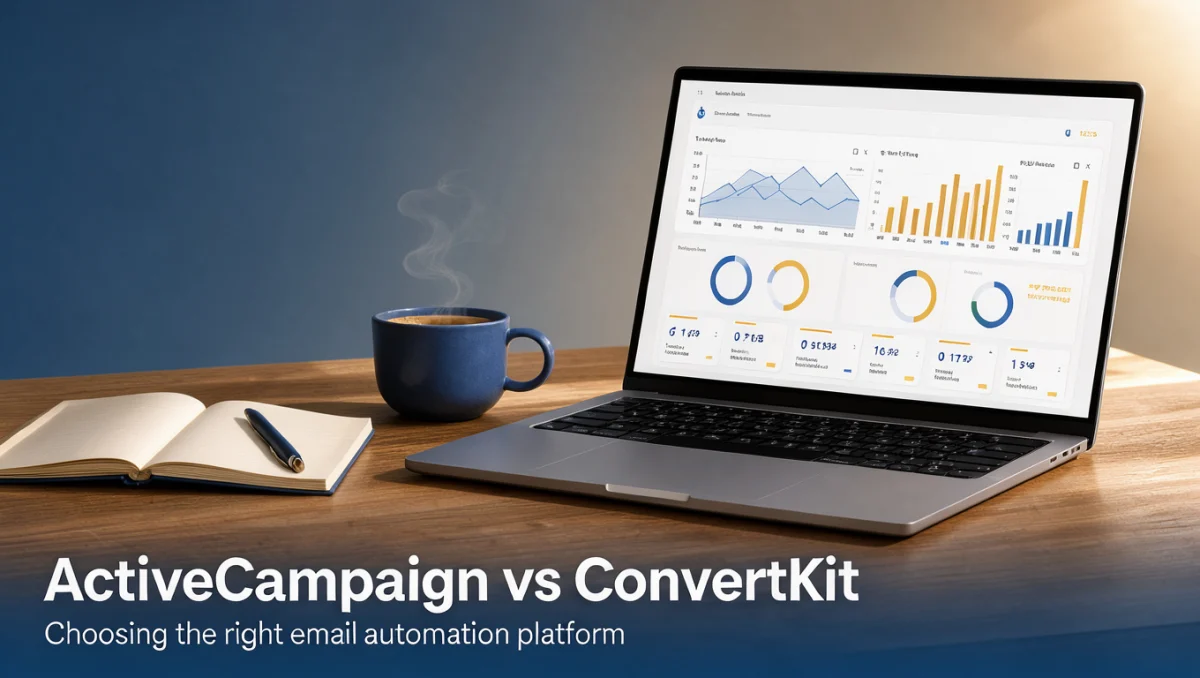
Before you commit to a tool, it helps to understand how activecampaign vs convertkit compare on structure, not just marketing claims. Both are hosted email marketing and automation platforms, but they are built around different priorities, and the right choice depends on how your audience and team actually work. Our team at Top Apps Reviews looks at audience requirements, administrative capacity and campaign goals so you can avoid expensive migrations later.
One platform leans toward structured contact pipelines and detailed multi-path journeys. The other focuses on writing-led messaging, creator revenue and simple subscriber organization. Browsing our Marketing resources can also help you place either option inside a broader promotional plan.
Quick Verdict
ActiveCampaign scores 7.8 out of 10 in our review. It suits growing sales teams and multi-channel marketers who need detailed contact records and multi-step pathways. ConvertKit suits solo operators, newsletter writers and course creators who want plain-text distribution and direct digital sales. Neither is a good match for someone who only needs a basic one-click mailing setup with no ongoing contact upkeep.
| Metric | Summary Evaluation |
|---|---|
| topappsreviews score | 7.8 / 10 |
| Best for | Teams that need contact tracking alongside multi-channel automation paths |
| Not ideal for | Senders who only send occasional announcements without audience segments |
| Key strengths | Contact management, workflow construction, audience segmentation, broadcast delivery |
| What to check before buying | Confirm contact tier definitions and any add-on fees on the official product websites |
1. How We Reviewed the Two Platforms

We assessed what each tool is designed to do, who it serves, and how it stacks up against similar products. The review uses seven criteria: features, ease of use, pricing and value, integrations, audience fit, support and competitive position. Plans and limits change often, so we flag what to verify on the official sites before purchasing. This article was researched and drafted with AI assistance, then reviewed and edited by the Top Apps Reviews Editorial Team.
2. Short Answer: The Core Positioning Difference
Knowing the basic split between these two tools prevents costly setup mistakes. ActiveCampaign works as an automation engine combined with contact record management, which suits businesses linking marketing campaigns to direct sales follow-up. ConvertKit centers on content publishing, simple tagging and nurturing relationships with readers, which suits independent publishers and educators.
When you weigh activecampaign vs convertkit by organizational scale, the gap appears quickly. ConvertKit shortens the path from blank page to published email, valuing clarity over branched logic. ActiveCampaign offers multi-condition triggers, contact scoring and deal tracking for teams handling long client decision cycles.
3. Positioning Comparison Table
Before looking at individual criteria, compare the core purpose and target audience of each platform.
| Tool | Best for | Core strength | Consider if |
|---|---|---|---|
| ActiveCampaign | Teams running multi-stage client journeys and sales outreach | Automated workflow paths and integrated contact deal records | You need conditional triggers based on website behavior and custom fields |
| ConvertKit | Independent creators, authors, podcasters and educators | Broadcast drafting and simple tag-based contact organization | Your priority is text-focused emails and selling digital assets directly |
4. Detailed Evaluation by Criteria
Scoring software against standard criteria gives a fairer basis for choosing, separating structural design from marketing language.
4.1. Features: Workflow Logic and Contact Tracking
Automation design is the biggest functional difference between these two services. ActiveCampaign offers visual journey mapping with branching decision paths, multiple trigger events and contact scoring rules. Marketers can build sequences that react to specific link clicks, custom form data or CRM deal progress. Contact records keep detailed behavior histories, so sales teams can review each person's interaction timeline.
ConvertKit uses a simpler method built around rules and sequences. Sequences send scheduled messages in a fixed order, while visual automations connect entry points to sequences through subscriber tags. Rather than managing complex contact profiles, ConvertKit treats each subscriber as one profile with assigned tags and custom fields. For digital product delivery and newsletters, this lighter structure cuts down setup effort.
4.2. Ease of Use: Interface Complexity and Learning Curve
Platform complexity reflects how much each system tries to do. ConvertKit offers a clean dashboard focused on writing broadcasts, building sequences and choosing landing pages. New users can draft and schedule a broadcast within an afternoon, since the interface deliberately leaves out intricate conditional panels.
ActiveCampaign has a steeper learning curve because of its extensive configuration options. Setting up user permissions, deal pipelines, attribution parameters and multi-stage automations takes careful planning. Teams often need dedicated onboarding time to structure custom fields before launching campaigns. Organizations without administrative staff may find the number of options overwhelming at first.
4.3. Pricing and Value: Long-Term Ownership Considerations
Checking official pricing directly is the only reliable way to judge total subscription value. Vendors change subscriber tiers and feature access from time to time, so review the official ActiveCampaign pricing page and the official ConvertKit pricing page to confirm current thresholds. For more software comparisons across categories, Top Apps Reviews publishes practical evaluations focused on sustainable business software spending.
For email automation tools, list growth is the main driver of rising costs. When comparing total cost of ownership, check how each provider counts duplicate contacts across segments, what fees apply when you exceed contact limits, and whether sales pipeline tools require a higher tier. Verifying these points on official sites helps your budget keep up with growth.
4.4. Integrations: Ecosystem Connections and External Data
Data interoperability determines how well a platform works with the rest of your technical stack. ActiveCampaign connects with major customer relationship systems, billing engines and e-commerce storefronts. This lets events from payment portals or shopping carts trigger automated follow-up sequences.
ConvertKit focuses on creator-oriented applications, including course platforms, digital checkout systems and community hosting tools. Both providers support developer webhooks and connections through common middleware services. Before buying, check the official integration directory of each platform to confirm that your website form plugin and payment provider connect natively without custom code.
4.5. Audience Fit: Alignment with Operational Models
Audience fit decides whether a tool feels natural or cumbersome day to day. ActiveCampaign targets businesses, agencies and service companies where marketing actions connect to closed client deals. If your team depends on pipeline tracking, lead qualification metrics and sales assignments, the platform matches your workflow.
ConvertKit suits solo entrepreneurs, writers, coaches and digital product sellers who communicate one-to-one with individual readers. These operators rarely need deal pipelines or detailed stage tracking. ConvertKit includes built-in tools for paid newsletter subscriptions and digital downloads, making it a good match for content-led businesses that value publishing speed over sales pipeline monitoring.
4.6. Support: Assistance Models and Onboarding Resources
Support matters most when automations misfire or subscriber data fails to sync. Both companies provide knowledge bases, self-paced learning resources and direct contact channels. Because support availability and response commitments often vary by subscription tier, confirm the specific terms on the official ActiveCampaign and ConvertKit pages before signing a contract.
When evaluating support, find out whether migration help is included for larger subscriber databases. Moving existing automations, subscriber tags and form integrations between systems is technically demanding. Checking vendor-assisted migration terms in advance can prevent costly downtime during a switch.
4.7. Competitive Position: Alternative Industry Options
The wider email software market includes many competing products for specific segments. Mailchimp targets general small business marketing with ready-made templates, while HubSpot offers broader inbound sales tools for mid-sized organizations. In the creator space, Substack provides focused newsletter hosting without a separate marketing automation layer.
Within this field, ActiveCampaign holds a distinct position built on sophisticated automation and integrated CRM capabilities. ConvertKit occupies a clear niche centered on creator independence, audience ownership and simple content monetization. Each vendor keeps a coherent value proposition within its target sector.
5. How to Decide: A Strategic Framework

Choosing between ActiveCampaign and ConvertKit means weighing your team setup, main marketing channels and long-term goals. Work through this process to find the right platform:
- Map your primary customer journey: Decide whether your sales process needs individual contact follow-up and deal tracking, or relies mainly on scheduled broadcasts and self-service digital purchases.
- Audit administrative capacity: Estimate how much time your staff can spend managing the platform. Advanced automation engines need regular upkeep, while simpler broadcast tools need little oversight.
- Review technical connections: List your current content management system, checkout tool and webinar software, then confirm native sync support on each tool's official website.
- Analyze subscriber data structures: Decide whether your targeting relies on detailed behavioral event tracking or straightforward interest tags.
- Verify current plan terms: Visit the official plan comparison pages to confirm list size limits and seat licensing before committing to a purchase.
6. Frequently Asked Questions
How should teams decide between CRM-centric and newsletter-centric platforms?
Start by asking whether your main business model depends on closed client deals or direct content monetization. If sales reps need individual contact records, deal stages and behavioral scoring, a platform with integrated CRM features is the better fit. If your revenue comes from digital downloads, memberships or regular newsletters, a content-focused platform makes daily operations simpler.
What drives total platform costs as subscriber lists grow?
Email tool subscription costs depend mainly on subscriber volume tiers and seat permissions. Many platforms raise monthly billing once contact lists pass certain numerical thresholds. Check whether duplicate addresses across multiple segments count toward your contact quota on the official vendor websites.
Why does visual workflow mapping matter for multi-step campaigns?
Visual workflow mapping lets marketing managers follow complex branching logic based on user actions. When messages depend on several conditions, such as visiting a pricing page or downloading a specific guide, visual builders help teams spot dead ends and logic conflicts. Simpler rule-based engines work well for linear sequences but get harder to audit across long multi-path funnels.
What should businesses check before moving to a new email platform?
Before migrating, verify how existing subscriber tags, custom field values and interaction history transfer between systems. Also check whether your opt-in forms, landing pages and third-party checkout connections need reconfiguring. Reviewing the official migration guides and data import specifications beforehand helps prevent lost contact context and missed emails.
7. Final Verdict
The choice between ActiveCampaign and ConvertKit comes down to how complex your outreach strategy is. ActiveCampaign suits organizations that need integrated contact records, multi-condition workflows and sales pipeline monitoring. ConvertKit offers an easy environment for publishers, solo creators and educators who want reliable broadcast delivery without administrative friction.
| Criterion | Score / 10 | Reason |
|---|---|---|
| Features | 8.5 / 10 | Deep automation and contact tracking for ActiveCampaign, simpler but capable tools for ConvertKit |
| Ease of Use | 7.5 / 10 | ConvertKit is quicker to learn, while ActiveCampaign requires more setup time |
| Pricing and Value | 7.0 / 10 | Costs rise with list size, so verify current tiers on official pricing pages |
| Integrations | 8.0 / 10 | Broad CRM and e-commerce links for ActiveCampaign, strong creator tool links for ConvertKit |
| Audience Fit | 8.5 / 10 | Each platform clearly serves a distinct operating model |
| Support | 7.0 / 10 | Support depth varies by plan, so confirm terms before signing |
| Competitive Position | 8.0 / 10 | Both hold clear, defensible positions in their segments |
| Overall Score | 7.8 / 10 | Strong in their respective niches, with fit depending on your workflow |
For independent creators, authors and educators, ConvertKit is an accessible route to audience engagement and simple digital sales. For growing marketing teams, agencies and B2B companies that need detailed customer relationship pipelines, ActiveCampaign provides the depth required. Check current plan details on the official product websites to confirm the right fit for your budget.
Have specific software questions or need guidance on your marketing stack? Send them to our editorial team at https://topappsreviews.com/contact/ or connect with Top Apps Reviews on LinkedIn at https://www.linkedin.com/company/topappsreviews/.