topappsreviews may earn a commission when you buy through links on this page, at no extra cost to you. This does not affect our ratings.
Growing cross-border companies often struggle with collecting payments in several currencies, paying overseas suppliers and giving staff spending cards without reconciliation chaos. Our airwallex review examines whether this dedicated international finance platform fits those daily demands in 2026, using a structured benchmark designed to give expanding organizations practical buying guidance.
Choosing a financial tool should start with how well it fits your real workflows, not with promotional claims. Before moving company funds or changing your treasury setup, compare the currencies you handle, the settlement networks available and the spending controls against the countries where your money actually flows.
Quick verdict: Airwallex scores 7.7 / 10 overall. It suits businesses trading across borders that want multi-currency collections, international supplier payouts and corporate expense cards in one place. It is less useful for purely domestic organizations that operate in a single currency and need only basic local banking.
| Evaluation Metric | Summary |
|---|---|
| topappsreviews score | 7.7 / 10 |
| Best for | Cross-border businesses handling payments, collections, and company expenses across multiple territories |
| Not ideal for | Local businesses conducting transactions solely within their domestic market in a single currency |
| Key strengths | Multi-currency collections, cross-border supplier payouts, foreign exchange management, and corporate expense card issuing |
| What to check before buying | Check international transfer transaction fees, currency exchange markups, account maintenance terms, and corporate card issuance policies on the official website |
1. How topappsreviews Reviewed Airwallex
We assessed what the platform is built to do, who it serves and how it stacks up against similar tools, scoring it across seven criteria: features, ease of use, pricing and value, integrations, audience fit, support and competitive position. Plans, prices and limits change frequently, so we flag what to confirm on the official website before purchasing. This article was researched and drafted with AI assistance, then reviewed and edited by the topappsreviews Editorial Team.
2. What Is Airwallex and Who Is It For?
Airwallex is a financial technology platform that helps modern businesses trade across borders, manage currency exchange and coordinate corporate spending. Rather than maintaining separate domestic banks in every country where they operate, companies can use unified multi-currency virtual accounts, global payment rails and employee card issuing through one central portal.
The platform mainly serves digital commerce merchants, international service agencies, software exporters and remote-first teams. When businesses hire overseas contractors or buy inventory from foreign manufacturers, traditional payment networks often charge high currency conversion fees and settle slowly. Platforms in this category reduce that friction by providing access to local settlement clearing across several jurisdictions.
Finance leaders reading this airwallex review should remember that software platforms do not offer tax or legal advice. Because cross-border collections and foreign currency holdings affect financial reporting, companies should consult an accountant or independent financial advisor when setting up international treasury accounts.
3. Core Features of Airwallex
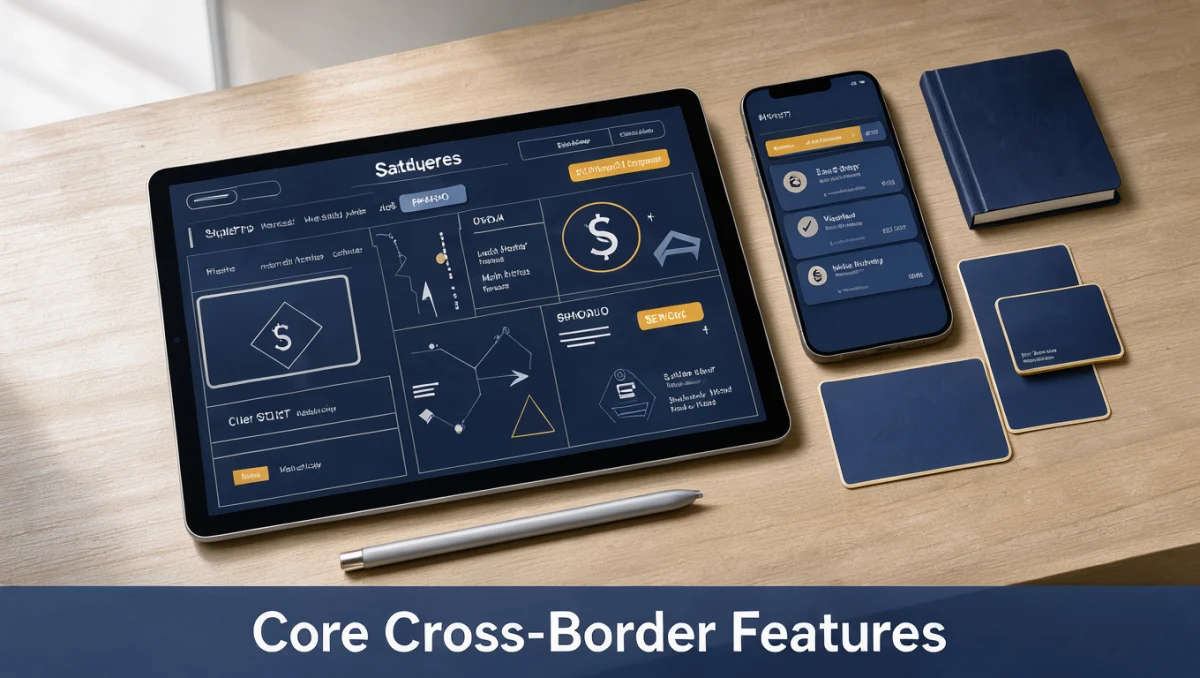
Cross-border financial platforms of this kind combine collection methods, currency conversion, outbound payments and corporate spending controls. Understanding these functional groups helps treasury teams judge whether the system meets their requirements.
3.1. Global Collection Accounts
Global collection accounts let organizations hold local virtual bank details in several economic regions. With localized clearing identifiers such as account numbers and sort codes, businesses can receive customer remittances from international marketplaces, payment processors or enterprise clients without asking the sender to make costly wire transfers.
Incoming funds land in balances matching their currency, so no automatic conversion happens on receipt. Finance managers can keep funds in their original denominations until exchange conditions suit them, or use those balances directly to pay supplier invoices in the same currency.
3.2. Foreign Exchange and Currency Management
The foreign exchange tools provide conversion between major trading currencies. Organizations can convert on demand or set target exchange rates that trigger automatically once valuations reach preferred levels.
Viewing several currency balances in one dashboard simplifies international cash planning. Treasurers can monitor holdings across denominations, earmark funds for future obligations and reduce exposure to sudden currency swings across their global supply chain.
3.3. International Supplier and Payroll Payouts
Outbound payout infrastructure lets businesses pay suppliers, contractors and remote staff worldwide. Where possible, transfers travel over domestic payment rails in the destination country, avoiding correspondent bank deductions and shortening processing times.
Finance teams can send single payments or upload bulk schedules to pay hundreds of recipients at once. Central payment tracking shows receipt status and keeps records ready for annual audits.
3.4. Corporate Cards and Expense Management
Administrators can issue physical and virtual commercial cards to staff and departments. Each card can carry its own transaction limits and spending category restrictions, and can be frozen instantly from the central console.
Expense modules capture receipt uploads and match them against card settlement records. Feeding this spending data into your Accounting software simplifies month-end closing and removes manual expense report reconciliation.
4. Ease of Use and Learning Curve
Running a multi-currency treasury platform means working through compliance checks, security authentication and payment approval workflows. The interface groups balances by currency and places statements, pending transactions and transfer forms in clearly labelled sections.
Onboarding requires corporate identity checks, beneficial ownership documents and a review of business activity. After verification, inviting team members and assigning roles is straightforward, with permission templates that control who can approve external payments or view sensitive balances.
Teams moving from consumer payment apps will face a moderate learning curve around payment routing types, localized recipient bank details and international settlement timelines. Standardizing recipient data templates reduces errors during the first months of use.
5. Pros and Cons of Airwallex
Weighing advantages against operational limits helps buyers pick a tool that matches their team's capabilities and payment profile.
5.1. Advantages of Airwallex
- Consolidated multi-currency accounts let businesses hold international balances without opening foreign legal entities.
- Direct access to local clearing systems minimizes correspondent banking deductions on outbound commercial payments.
- Flexible virtual card issuing supports precise departmental budgets and automated transaction tracking.
- Centralized receipt collection and expense reconciliation lighten the workload for internal finance teams.
5.2. Limitations of Airwallex
- Business verification requires extensive corporate paperwork and ownership proof during onboarding.
- Supported payment rails differ depending on the legal registration country of your business entity.
- Account maintenance terms and currency markup fees need careful monitoring to control ongoing costs.
6. Airwallex vs Similar Tools
Comparing Airwallex with established international business platforms helps identify which provider fits your company profile and transaction volumes.
| Platform | Target Audience | Core Positioning | Primary Buying Consideration |
|---|---|---|---|
| Airwallex | Growing cross-border enterprises and digital commerce brands | Unified global accounts, card issuing, and multi-currency infrastructure | Ideal when seeking comprehensive corporate card issuing alongside international receivables |
| Wise Business | Freelancers, independent consultants, and small teams | Transparent international transfers and straightforward multi-currency accounts | Suited for simpler international invoicing without complex expense hierarchy workflows |
| Revolut Business | European and international companies seeking multi-currency cards | Corporate treasury management with company spending card controls | Consider when seeking tightly integrated multi-currency company card management across corporate hubs |
| Payoneer | Marketplace sellers and freelance contractors | Global marketplace payouts and cross-border vendor disbursements | Suited for merchants receiving primary sales settlements from established international marketplaces |
7. Who Should Use Airwallex?

Whether Airwallex suits your organization depends on where your customers, team members and suppliers are located.
7.1. Small Business Owners and E-Commerce Merchants
Online sellers serving several regions can collect payments in local buyer currencies. Receiving funds into local collection accounts avoids immediate conversion fees, and accumulated balances can pay international manufacturing partners.
7.2. International Agencies and Digital Consultancies
Agencies working with clients on several continents can give localized payment instructions on invoices. This encourages prompt settlement and lets owners pay contractors in local currencies without paying conversion charges twice.
7.3. Freelancers and Solo Operators
Independent professionals with occasional overseas clients may find an enterprise financial platform more complicated than they need. Those invoicing abroad only now and then should check the official fee schedule to confirm the account stays cost-effective at low transaction frequencies.
7.4. Corporate Office and Finance Staff
Internal accounting teams running several subsidiaries benefit from unified reporting. Finance managers can set tiered approval limits for departmental payouts, monitor card allocations and export consolidated transaction logs into central ledgers.
7.5. Who Should Avoid Airwallex?
Companies that trade entirely within their home market and invoice only in their national currency gain little from multi-currency accounts. Businesses that depend on cash deposits or in-person branch services should stay with a conventional domestic bank.
8. How to Choose the Right Plan
Pricing, foreign exchange margins and card terms vary by registration territory and transaction volume. Use this checklist to review the key cost drivers on the official website before signing any agreement.
| What to check on the official website | Why it matters for your budget |
|---|---|
| Currency exchange margins and weekend markups | Foreign exchange spreads significantly influence the net value of large currency conversions. |
| Outbound payment fees by network type | Local payment rails typically cost less than cross-border wire transfers, impacting high-frequency vendor payouts. |
| Virtual and physical card issuance costs | Scaling departmental card distribution requires understanding per-card creation and replacement charges. |
| Account maintenance and balance holding rules | Certain account structures carry minimum monthly activity thresholds or holding parameters in specific jurisdictions. |
| Incoming payment collection fees | Receiving client settlements via localized clearing versus international wires alters overall transaction margins. |
9. Frequently Asked Questions
9.1. How should a business evaluate international payment software?
Start by listing the countries where your suppliers are based, the currencies your clients pay in and the clearing networks the provider supports. Confirm on the official website how transfers are routed so you know domestic payment methods are available in your main commercial regions.
9.2. What documents are needed to verify a corporate international account?
Verification usually requires incorporation certificates, proof of registered address, beneficial ownership details and a description of business activities. Check the official onboarding guide before you apply so you have every corporate filing and identity document ready.
9.3. Why do currency conversion markups matter for overseas transactions?
A markup is the percentage added to the wholesale exchange rate during conversion. Over high volumes, small percentage differences add up to large costs, so review the published conversion terms on the official pricing page.
9.4. When should a company consult a professional accountant for international accounts?
Consult an independent accountant or tax professional when opening foreign currency accounts, handling cross-border VAT or setting up subsidiaries in several jurisdictions. They help with ledger classification, tax compliance and accurate reporting across currencies.
10. Final Verdict
Airwallex offers a capable, modern setup for growing cross-border businesses that want unified control over multi-currency collections, global payouts and employee expense cards. It removes much of the hassle of opening conventional overseas bank accounts, making international operations far more practical for online merchants, agencies and remote companies.
| Evaluation Criterion | Score / 10 | Editorial Assessment |
|---|---|---|
| Features | 8.5 / 10 | Broad multi-currency collection, foreign exchange tools, global payment rails, and corporate card controls cover comprehensive cross-border business workflows. |
| Ease of Use | 7.5 / 10 | The modern administrative console is well-organized, though identity verification requirements and international payment routing require an initial adjustment period. |
| Pricing and Value | 7.2 / 10 | Potential savings on international settlement networks are appealing, but buyers must evaluate currency exchange markups and network fee schedules directly on the official website. |
| Integrations | 7.0 / 10 | Data exports connect into major corporate bookkeeping workflows, though buyers should verify compatibility with their specific ledger setup on official documentation pages. |
| Audience Fit | 8.8 / 10 | Excellently configured for cross-border digital commerce stores, software companies, and international service firms managing international receivables and disbursements. |
| Support | 7.0 / 10 | Onboarding resources and account verification guidance provide essential documentation, though buyers should confirm service levels for their commercial tier. |
| Competitive Position | 8.2 / 10 | Maintains a distinct operational focus on expanding commercial enterprises needing integrated card issuing alongside global collections, competing effectively against alternative cross-border services. |
Overall topappsreviews score: 7.7 / 10
If your organization trades in several currencies and pays international suppliers, an account offers real administrative advantages. If your transactions stay purely domestic, a standard commercial account with a regional bank is the practical choice. Visit our Top Apps Reviews homepage for more independent software evaluations.
Readers with specific operational questions or feedback are welcome to submit inquiries through https://topappsreviews.com/contact/ or follow topappsreviews on LinkedIn at https://www.linkedin.com/company/topappsreviews/.