topappsreviews may earn a commission when you buy through links on this page, at no extra cost to you. This does not affect our ratings.
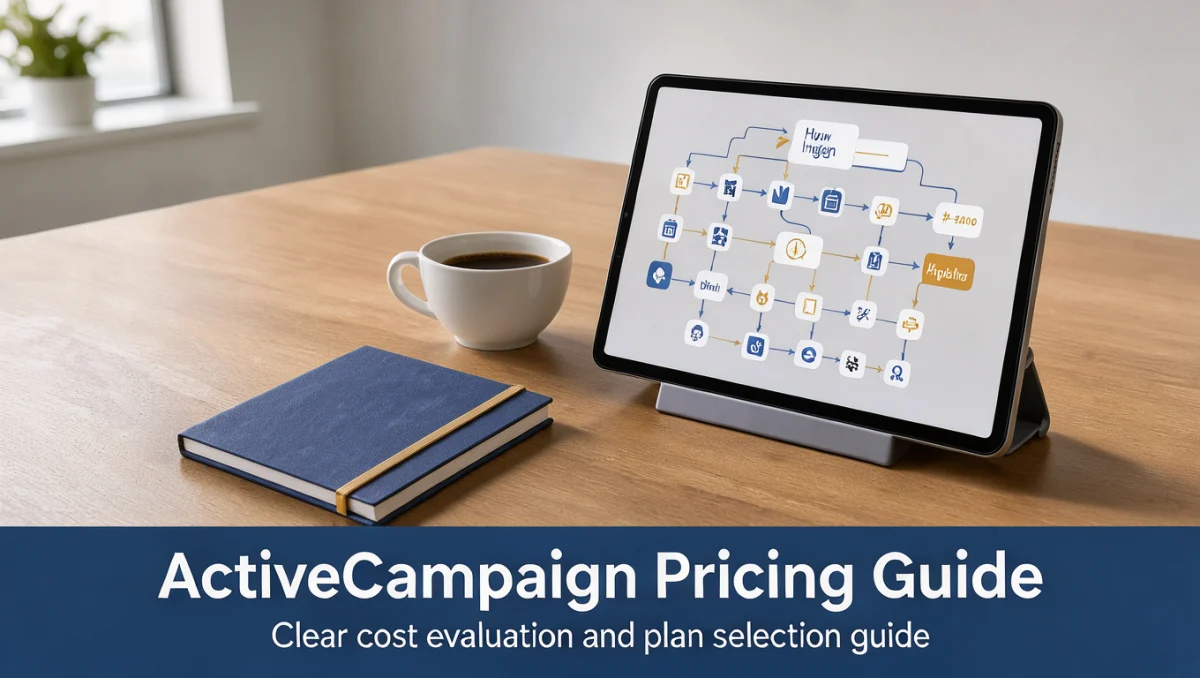
Budgeting for activecampaign pricing is one of the most consequential software decisions a marketing team can make. Recurring costs add up quickly as subscriber lists grow, so buyers need to weigh functional depth against ongoing overhead. Our evaluation at Top Apps Reviews focuses on how automation tools actually support everyday team workflows, rather than on short-lived promotions or obscure subscription terms.
Picking the right plan starts with understanding how vendors price their tiers across contact thresholds, feature access, and seat counts. Instead of guessing, buyers should review their current contact totals, the complexity of the automations they need, and the integrations their stack requires. The sections below explain how these pricing structures work and what to validate before you commit budget.
Quick verdict: Scoring 7.9/10, ActiveCampaign suits marketing teams and growing businesses that need advanced customer journey automation, multi-stage pipeline management, and detailed contact tracking. It is a weaker fit for solo operators or occasional senders who only need simple broadcast newsletters without branching logic.
| Metric | Details |
|---|---|
| topappsreviews score | 7.9/10 |
| Best for | Growing marketing teams that need multi-stage automation workflows and structured contact tracking |
| Not ideal for | Occasional email senders and solo creators who only send simple broadcast newsletters without logic trees |
| Key strengths | Advanced automation builder, integrated contact record management, and targeted customer segmentation |
| What to check before buying | Contact threshold tiers, seat allocations, and renewal terms on the official pricing page |
1. How topappsreviews Reviewed ActiveCampaign
This review examines what ActiveCampaign is built to do, who it serves, and how it stacks up against comparable tools. We assessed it against the seven topappsreviews criteria: features, ease of use, pricing and value, integrations, audience fit, support, and competitive position. Plans, prices, and limits change frequently, so we highlight what to confirm on the official website before purchasing. This article was researched and drafted with the help of AI tools, then reviewed and edited by the topappsreviews Editorial Team.
2. How ActiveCampaign pricing works
To understand activecampaign pricing, start with its commercial structure. The platform is a software-as-a-service subscription that scales mainly with contact list volume and feature groupings. Organizations choose a tier based on how sophisticated their marketing automation workflows are, then adjust as the number of active records in their database grows.
Subscription software in the email and marketing automation category typically uses tiered models. Providers split their offerings into several levels, moving from basic campaign sending to complex multi-channel automation and sales pipeline synchronization. Buyers pay on recurring cycles, usually monthly or annual, with annual agreements offering a lower effective rate.
Because contact databases fluctuate as lead generation progresses, subscription costs shift whenever an account crosses a designated contact threshold. Marketing leaders should check the official ActiveCampaign pricing page directly to confirm current contact bands, since crossing a list milestone moves recurring costs into a higher bracket.
3. What drives your total cost

Software acquisition costs rarely stop at base platform fees. Marketing platforms introduce several financial variables that buyers must factor in before signing or committing an annual budget. Building these elements into your initial financial model prevents unexpected mid-cycle budget adjustments.
- Contact Volume Milestones: Marketing automation platforms bill primarily on active or stored subscriber records. Crossing a subscriber tier triggers an immediate tier increase, which makes regular database hygiene and pruning of unengaged subscribers essential.
- Team Seat Allocations: Multi-user marketing departments often run into seat caps. Additional administrator seats, campaign builder logins, or sales representative accounts may require plan upgrades or separate seat licensing fees.
- Advanced Automation and Segmentation Access: Sophisticated platforms reserve custom reporting, predictive segmentation, and advanced attribution models for higher subscription packages.
- Database Cleansing and Ingestion Costs: Migrating existing customer lists, re-verifying address validity, and setting up technical domain authentication require staff hours or specialized external services.
- Transactional Messaging Needs: High-volume operational alerts, password reset emails, and order confirmations often need dedicated infrastructure or billing arrangements separate from standard promotional campaigns.
Teams evaluating tools in the broader Marketing technology space should calculate their complete operating expenses rather than looking at base subscription rates in isolation. Weighing these elements alongside staff training requirements produces realistic software budget allocations.
4. Checklist before you pay
Before committing financial resources to an automation platform, procurement teams should verify key parameters against their operational roadmap. The following checklist highlights structural items to validate directly on the vendor's site.
| What to check on the official pricing page | Why it matters | Who it matters most for |
|---|---|---|
| Contact list band increments | Moving past a subscriber cap automatically changes recurring monthly charges | High-velocity lead generation teams and retail stores |
| Account seat limits | Adding campaign managers or sales reps could force unexpected tier upgrades | Collaborative teams and growing multi-person agencies |
| Billing commitment flexibility | Switching between monthly and annual terms affects cash flow and discount options | Startups and seasonal companies managing cash runways |
| Included data history retention | Campaign reporting and contact activity history depth varies across tiers | Analytics teams tracking long sales conversion cycles |
| Pipeline and CRM workflow access | Aligning sales pipeline tracking with automated marketing depends on tier inclusion | B2B companies running unified sales and marketing funnels |
Checking each item against your actual usage projections helps prevent surprise cost increases. Documenting your current contact counts, user needs, and desired reporting depth lets you compare available packages accurately.
5. Which type of plan fits which business
Software buyers should match their operational maturity to the right subscription capabilities. Choosing a plan that exceeds your team's capacity wastes spend, while an underpowered tier creates bottlenecks.
5.1. Solopreneurs and early-stage ventures
Early-stage operations mainly need consistent customer communication, basic email list collection, and simple welcome sequences. Teams at this stage should confirm that foundational tiers include core newsletter templates and direct tag-based segmentation without requiring technical automation logic. If your contact database is still modest, keeping overhead lean matters more than building multi-branch journeys.
5.2. Expanding commercial teams
Growing organizations generally need multi-step nurturing paths, behavioral triggers, and integrated pipeline management. Buyers managing established customer pipelines should confirm where deal tracking, lead scoring, and automated task assignment sit on the official activecampaign pricing plan comparison page. When marketing campaigns feed directly into sales follow-ups, paying for tiers that connect marketing triggers with sales pipelines delivers measurable workflow efficiency.
5.3. High-volume and multi-channel organizations
Enterprise-scale organizations manage large contact records, complex customer lifecycle journeys, and strict data governance requirements. Buyers in this category should verify how custom user permissions, single sign-on, and dedicated database throughput are provisioned in top-tier packages. Reviewing service response agreements and data governance terms directly with the vendor's sales team ensures the subscription meets institutional standards.
6. How to keep software costs down
Controlling software spend takes deliberate administrative discipline. Unmonitored contact lists and neglected subscriber hygiene inflate charges on any marketing automation system.
- Perform Regular List Pruning: Unengaged contacts who ignore messages for long periods consume database quota without adding commercial value. Set up automated routines to unsubscribe inactive contacts on a regular schedule.
- Audit User Accounts Quarterly: Remove departed team members or reassign unused seat licenses before renewal dates to avoid paying for vacant credentials.
- Consolidate Disparate Marketing Tools: Assess whether built-in pipeline management, contact capture forms, and campaign scheduling eliminate the need for separate standalone utility subscriptions.
- Align Contact Growth with Billing Milestones: Track monthly subscriber intake closely. If your list nears a threshold, run thorough database verification before crossing into a higher price bracket.
- Review Annual Commitment Options: If your organization has predictable contact volume and stable workflows, moving from monthly billing to an annual commitment generally lowers the cost per contact.
7. Is ActiveCampaign worth the cost
Whether activecampaign pricing is justified depends on how deeply your organization plans to use marketing automation. If your business relies on sophisticated customer journeys, conditional messaging paths, and coordinated contact segmentation, the platform offers strong functional leverage. The investment pays off when visual workflow builders save staff hours and convert prospects through automated follow-up sequences.
Organizations that only send occasional announcements, general updates, or simple newsletters may find advanced automation platforms unnecessarily complex and expensive. Tools such as Mailchimp or MailerLite often cover basic broadcasting needs with straightforward sending options. Matching your requirements to platform capabilities ensures you pay only for functionality your team actually uses. Explore more options in our Marketing section.
8. FAQ
How do buyers assess whether their team needs advanced automation workflows?
Review your existing marketing workflows and lead follow-up procedures. If your team manually routes inquiries, sends repetitive email sequences, or struggles to segment contacts by behavior, adopting advanced automation resolves key bottlenecks. If your communication consists only of uniform monthly newsletters sent to the whole list, simpler broadcast tools remain the cost-effective choice.
What should businesses budget for besides base subscription fees?
Organizations should budget for list validation utilities, technical domain authentication setup, internal staff onboarding hours, and custom template development. Complex setups may also require internal technical resources to connect external customer databases with the automation platform.
How can teams avoid paying for unused contact database capacity?
Implement automated suppression rules that flag subscribers with no engagement over three to six months. Removing or archiving inactive records keeps your total database count lower, which helps your subscription stay within lower billing brackets.
Should an organization choose monthly or annual billing commitments?
Teams testing new acquisition channels or experiencing fluctuating contact growth often benefit from monthly billing flexibility. Once contact numbers and automated sales funnels show predictable, sustained performance, switching to annual billing can reduce total yearly software spend.
9. Final verdict
| Criterion | Score /10 | Reason |
|---|---|---|
| Features | 8.8/10 | Provides advanced visual automation sequences, dynamic segmentation, and structured contact tracking. |
| Ease of Use | 6.8/10 | Advanced branching logic and deep workflow configuration require dedicated learning time for non-technical users. |
| Pricing and Value | 7.2/10 | Offers substantial functional depth, though contact tier increases require careful list management to protect return on investment. |
| Integrations | 8.2/10 | Connects with a broad range of third-party software, which users should confirm against their technical stack. |
| Audience Fit | 8.6/10 | Aligns closely with marketing departments and expanding businesses that prioritize lifecycle automation. |
| Support | 7.4/10 | Support access varies across subscription tiers, so buyers should verify response channels on official pages. |
| Competitive Position | 8.4/10 | Holds a distinct advantage in workflow automation logic over basic email sending services. |
Overall score: 7.9/10
ActiveCampaign delivers substantial value for marketing teams, online businesses, and growing enterprises focused on optimizing customer communication pipelines. Organizations with clear segmentation strategies and automated nurturing sequences will get the most from the platform. Simpler operations should confirm their functional needs before committing to advanced automation tiers.
If you have questions about choosing software for your marketing stack, contact our team through our Top Apps Reviews contact page or follow topappsreviews on LinkedIn.