topappsreviews may earn a commission when you buy through links on this page, at no extra cost to you. This does not affect our ratings.
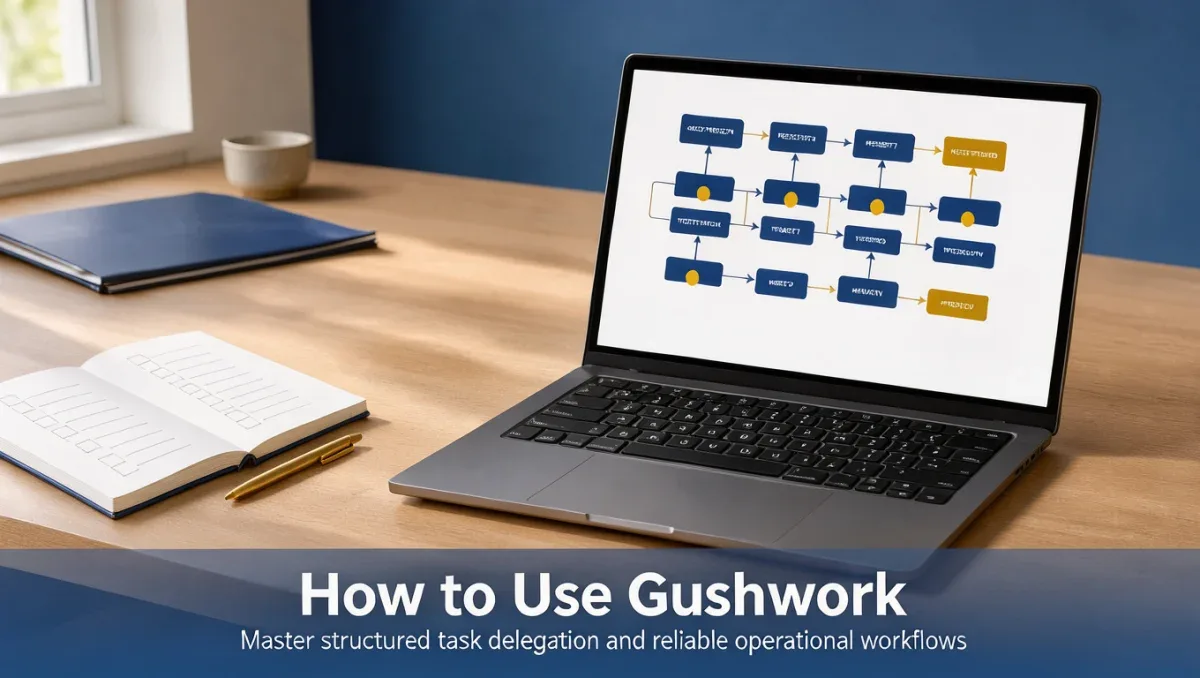
Getting started with how to use gushwork means turning your recurring operational duties into written, step-by-step procedures before handing them off to people or automated execution loops. Teams adopt Gushwork to coordinate administrative handoffs, standardize routine processes, and keep leaders informed about daily activity. At Top Apps Reviews, we assess how well a platform supports dependable delegation so that every handoff stays on track.
Automation tools produce steady results only when teams invest time in clear instructions and well-defined checkpoints. Whether you are handling data entry, lead follow-up, or syncing information between platforms, a deliberate setup approach avoids miscommunication and keeps output quality predictable across every workflow.
Quick answer: To get the most from Gushwork, document standard procedures, specify inputs and expected results, add verification checkpoints, and test with small pilot batches. Examine early outputs carefully, refine instructions based on the variations you observe, and schedule a weekly feedback session so execution stays consistent as volume grows.
| Aspect | Details |
|---|---|
| Who this guide is for | Operations managers, business owners, and administrative leads delegating standard workflows |
| What you need before starting | Documented process checklists, sample data, clear quality criteria, and access credentials |
| What you will have at the end | A repeatable delegation framework, defined feedback cycles, and verified execution pipelines |
1. How Top Apps Reviews Built This Guide
This guide pairs the capabilities of the software covered here with the Top Apps Reviews buying framework, helping you choose the option that matches your business needs. Pricing, plan limits, and features change frequently, so we highlight what to verify on the official website before purchasing. This article was researched and drafted with the help of AI tools, then reviewed and edited by the Top Apps Reviews Editorial Team.
2. Before You Start
Thorough preparation is what makes operational delegation succeed across business systems. Before launching tasks in Gushwork, collect the materials needed to guide execution without confusion.
- Documented standard operating procedures that detail each task stage, input source, and expected deliverable.
- Sanitized sample records covering both typical cases and unusual variations.
- Account permissions and shared credentials limited strictly to the target applications required.
- Defined acceptance criteria and measurable quality standards for final delivery approval.
- Designated internal contacts responsible for resolving edge cases and approving process changes.
3. Step-by-Step Workflow

Running work through a delegation platform means moving in sequence from defining scope to governing quality. Check the official Gushwork documentation to confirm current account settings and administrative setup paths.
- Define the process boundary: Pinpoint the exact trigger that starts each workflow and the final milestone that closes it. Clear boundaries prevent task sprawl and keep accountability visible across systems.
- Prepare instructional materials: Write step-by-step instructions that describe the outcome expected at each stage. Teams using modern AI task platforms benefit when instructions spell out the criteria for acceptable work.
- Run an initial pilot batch: Submit a limited set of sample work and evaluate accuracy against your documented rubric. A pilot reveals unclear instructions before full operational volume is processed.
- Establish review milestones: Set formal approval gates before deliverables move into production systems. Systematic verification protects live business databases from unchecked manual entries.
- Refine guidance iteratively: Update base instructions whenever new edge cases appear. Recording edge cases builds a stable reference baseline that prevents repeated errors.
4. Your First 30 Days
A structured ramp-up schedule helps teams build predictable habits while checking quality at each stage. Follow this four-week framework from Top Apps Reviews to pace onboarding and maintain standards.
| Week | Routine to build | Why it matters |
|---|---|---|
| Week 1 | Map workflows and run isolated sample batches | Surfaces process ambiguities early without disrupting active operations |
| Week 2 | Introduce daily spot-checks and adjust instructional notes | Corrects minor misalignments before workflows take on higher volume |
| Week 3 | Formalize verification checkpoints and track revision rates | Establishes measurable quality baselines and exposes persistent bottlenecks |
| Week 4 | Complete a full workflow review and widen task scope | Confirms stability and prepares the process for broader cross-department use |
5. Common Mistakes and How to Avoid Them
Handoffs often run into trouble because of organizational assumptions rather than execution failures. Keeping these best practices in mind prevents disruption during implementation.
- Delegating unrefined workflows: Outsourcing a task before its manual steps are clarified leads to inconsistent results. Standardize the sequence internally before setting up external handoffs.
- Omitting explicit edge-case instructions: Assuming operators will guess the right outcome for unusual data stalls tasks. Provide a clear fallback rule for items that cannot be classified.
- Skipping structured feedback loops: Giving feedback sporadically creates recurring discrepancies. Schedule regular reviews so procedural changes are documented consistently.
- Granting excessive system privileges: Handing out broad administrative access raises security risk. Limit team credentials strictly to the functional environments they need.
6. When to Ask for Help
Knowing when to bring in external specialists or official support keeps your operations compliant and reliable over time. Seek expert guidance under these conditions:
- When workflows handle regulated personal data, sensitive health records, or complex financial transactions that require specialized compliance safeguards.
- When error rates stay high despite detailed updates to your base procedural documentation.
- When critical handoffs stall because of credential, permission, or administrative routing failures.
- When your internal team lacks the capacity to design quality assurance frameworks for growing task volumes.
7. Frequently Asked Questions
How much time is needed to set up an operational workflow?
Setup time depends largely on how thorough your existing documentation is. Teams with written operating instructions can usually launch pilot tasks within several business days, while unstructured workflows need extra preparation to set standards, gather representative samples, and define approval checkpoints.
What should teams do when task outputs contain errors?
Isolate the discrepancy right away and review the original instructions to find where the ambiguity lies. Write specific corrective notes that reference the initial standard, update the base procedure with the clarified rule, and run another verified sample before resuming normal execution.
Is a technical specialist required to manage daily handoffs?
Operations managers and administrative professionals with solid organizational skills can coordinate daily workflows effectively. Technical specialists are most valuable when designing advanced data pipelines, setting up permission structures, or troubleshooting complex multi-platform integrations.
What preparation is necessary before expanding operational volume?
Confirm that your pilot batch consistently meets the accuracy benchmark across several consecutive cycles before scaling. Make sure review checkpoints work reliably, backup personnel understand the approval routine, and your documentation covers every recently resolved process variation.
8. Next Steps
A dependable delegation system requires continuous refinement and tracked milestones. Take these concrete actions to move your implementation forward:
- Audit your daily operational routines to identify the top three repetitive tasks that are good candidates for delegation.
- Draft comprehensive step-by-step instructions for the first selected workflow, including sample deliverables and quality thresholds.
- Visit the official Gushwork website to verify current account tiers, governance settings, and onboarding options.
- Schedule recurring weekly audit sessions with your team to review accuracy metrics and update process documentation.
Have a question about choosing software? Send it to the Top Apps Reviews team through our contact page, or follow Top Apps Reviews on LinkedIn for new reviews and comparisons. For more on AI-driven tools, browse our Artificial Intelligence coverage. Learn more about how to use Gushwork in practice.